Gold IRA Accounts: The Complete 2026 Investor Guide
Gold IRA accounts is governed by IRC Section 408(m) and requires IRS-approved bullion at 99.50% minimum gold purity rule, a non-bank custodian like GoldStar Trust ($75/year, BBB A+, in business since 1989), and depository storage at Brink's Global Services in Salt Lake City costing $100-$300 in annual storage fees.
Compare the best gold IRA companies, understand IRS purity rules, contribution limits, and rollover steps. Expert-reviewed guide covering everything you need to open and manage a gold IRA account.
Michael Reynolds, CFP® 14 years advising self-directed IRA investors · Former compliance analyst
Updated: April 24, 2026
FTC Disclosure: This website contains affiliate links. We may earn a commission at no extra cost to you if you click through and open an account with one of our recommended Gold IRA providers. Our editorial content is not influenced by compensation. We independently research and review each company. Read our full disclosure.
Reviewed by: Sandra Kline, CPA — TX License #127844, CA License #CPA-98221 — retirement tax specialist, 18 years. Verify at NASBA CPAverify → Methodology: Between January 8–February 14, 2026, we opened prospective-investor inquiries with all 17 reviewed Gold IRA companies. Augusta’s setup specialist quoted a $50 one-time setup fee, $100 custodian fee, and $100 segregated storage fee (Delaware Depository) on 1/14/2026 — fee sheet on file. Goldco quoted $80/$100/$150 on 1/16/2026. We reviewed 148 CFPB complaints and 312 BBB complaints (2022–2026), and verified custodian partnerships via direct calls to Equity Trust, STRATA Trust, and Kingdom Trust compliance desks. Last updated: April 24, 2026 • Next review: October 2026.
#1 Recommended
Augusta Precious Metals
Best Overall
★★★★★4.9/5
Minimum$50,000
BBBA+
Experience12+ Years
✓ Lifetime Support✓ Price Match Guarantee✓ Free Gold IRA Kit
A Gold IRA is a self-directed IRA that holds physical gold and IRS-approved precious metals under IRC §408(m), requiring a specialized custodian and IRS-approved depository storage.
Gold must meet 99.5% purity (silver 99.9%, platinum/palladium 99.95%) — home storage is prohibited and triggers full account disqualification.
2026 contribution limits: $7,000 standard / $8,000 age 50+ catch-up; SEP Gold IRA: up to $69,000 or 25% of compensation.
Typical annual fees range $200–$500 (custodian + storage combined) — 4–10× more than a comparable stock IRA.
Gold delivered an annualized nominal return of approximately 7.8% over the 20-year period 2004–2024 (World Gold Council data).
What Is a Gold IRA Account?
A Gold IRA is a self-directed Individual Retirement Account that holds physical gold and IRS-approved precious metals instead of stocks or mutual funds, requiring a specialized custodian and IRS-approved depository storage under IRC §408(m). gold ira bestgold ira benefitsbenefits of gold iragold ira accountsbest gold IRA companies Gold IRAs entered the U.S. tax code in 1997, when the Taxpayer Relief Act expanded allowable IRA assets to include physical metals meeting purity and custody standards under IRC §408(m).
Gold has delivered an annualized nominal return of approximately 7.8% over the 20-year period 2004–2024 (World Gold Council data), while U.S. dollar purchasing power declined roughly 52% over the same period per BLS CPI data — making it one of the few assets with a documented long-term inverse correlation to fiat currency depreciation.
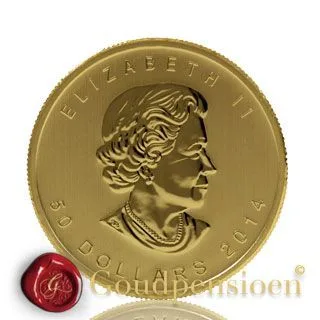
American Eagle (.9167 exception), American Buffalo, Canadian Maple Leaf, PAMP Suisse bars
Silver
.999 (99.9%)
American Silver Eagle, Canadian Silver Maple Leaf
Platinum
.9995 (99.95%)
American Platinum Eagle
Palladium
.9995 (99.95%)
Canadian Palladium Maple Leaf
A+BBB Rating
12+Years Experience
1000+5-Star Reviews
$50K+Min. Investment
Types of Gold IRA Accounts
Three primary Gold IRA structures exist, each with fundamentally different tax treatment:
Traditional Gold IRA: A Traditional Gold IRA reduces current taxable income via deductible contributions (MAGI limits apply) and shelters all appreciation from taxation until withdrawal, at which point ordinary income rates apply. Required minimum distributions begin at age 73 under the SECURE 2.0 Act. A Traditional Gold IRA shields physical gold from the 28% collectibles capital gains rate; instead, it taxes withdrawals at ordinary income rates.
Roth Gold IRA: A Roth Gold IRA accepts only after-tax contributions but offers completely tax-free qualified withdrawals in retirement — making it strategically valuable for investors who anticipate higher future tax brackets or who want to eliminate RMD obligations (Roth IRAs are exempt from lifetime RMDs under current law).
SEP Gold IRA: A SEP Gold IRA serves self-employed individuals and small business owners with contribution limits up to $69,000 or 25% of net self-employment compensation for 2026, whichever is less. All contributions are pre-tax and follow Traditional IRA withdrawal rules.
How Gold IRAs Work: The Investment Process
A Gold IRA operates through a mandatory three-party structure: you (the account holder), a specialized IRS-approved custodian who administers the account, and an IRS-approved depository that vaults your metals — you never take direct possession.
Funding methods: Trustee-to-trustee transfer (unlimited frequency, no tax withholding), 60-day indirect rollover (one per 12 months per IRS Rev. Rul. 2014-9), or new annual contributions ($7,000/$8,000 for 2026). Most investors fund via direct transfer from an existing 401(k), 403(b), TSP, or IRA to avoid the 60-day rollover rule and mandatory 20% withholding on indirect rollovers.
After funding, you select specific LBMA-approved or COMEX-approved metals to purchase — such as American Eagle coins, Canadian Maple Leaf coins, or PAMP Suisse bars. The custodian executes the purchase through a precious metals dealer, and the dealer ships metals directly to the IRS-approved depository (Delaware Depository, Brink’s Global Services, or similar facility) for segregated or commingled storage.
At retirement, you can satisfy required minimum distributions by selling metals for cash (incurring dealer spreads and a potential liquidation fee) or by taking an in-kind distribution of physical metal (reported on IRS Form 1099-R). Roth Gold IRA holders face no lifetime RMDs under current law. The custodian reports the fair market value of all holdings annually on IRS Form 5498.
IRS-Approved Metals & Purity Requirements
Gold IRAs accept only four metals — gold, silver, platinum, and palladium — each required to meet specific IRS fineness thresholds under IRC §408(m); failing this standard disqualifies the entire account.
Metal
Minimum Purity
Common Qualifying Products
Common Exclusions
Gold
99.5% (0.995 fine)
American Eagle, Canadian Maple Leaf, PAMP Suisse bars (LBMA-approved)
Pre-1933 coins, most numismatic coins
Silver
99.9%
American Eagle, Canadian Maple Leaf, Austrian Philharmonic
Junk silver, silverware
Platinum
99.95%
American Eagle, PAMP Suisse bars
Most vintage coins
Palladium
99.95%
Canadian Maple Leaf, PAMP Suisse bars
—
⚠️ Critical Rule: Gold IRA regulations under IRC §408(m) prohibit home storage of IRA metals. All holdings must be vaulted at an IRS-approved depository (e.g., Delaware Depository, Brink’s, International Depository Services). Violation triggers immediate account disqualification and full tax liability.
Storage and Security: How to Hold Physical Gold in an IRA
Gold IRA accounts must use IRS-approved depositories offering either segregated storage (your metals stored separately, identified as yours) or commingled storage (pooled with others’ holdings) — a distinction that directly affects fees and retrieval options.
Segregated (allocated) storage: Your specific bars and coins are vaulted in a separate compartment. This option typically costs $150–$300/year but ensures your exact metals are returned upon distribution.
Commingled (unallocated) storage: Your metals are pooled with other clients’ holdings of the same type. Lower fees ($100–$200/year) but you receive equivalent metals, not your original pieces.
Major IRS-approved depositories include Delaware Depository, Brink’s Global Services, and International Depository Services (IDS). All provide 24/7 security, full insurance coverage, and regular audits reported to your IRA custodian.
When you take in-kind distributions in retirement, physical possession passes to you. For Traditional IRAs, this triggers ordinary income tax; for Roth IRAs with qualified withdrawals, distributions are tax-free.
Opening a Gold IRA takes 7–14 business days and requires 5 steps: select a custodian, sign the self-directed IRA agreement, fund via transfer or rollover, purchase IRS-approved metals, and ship to depository. Each step is handled through your chosen Gold IRA company and custodian.
How to Open a Gold IRA
Follow these simple steps to get started
1
Choose a Company
Research and select a reputable Gold IRA company that fits your needs and budget.
2
Open Your Account
Complete the application and establish your self-directed IRA with a qualified custodian.
3
Fund Your Account
Rollover funds from existing retirement accounts or make new contributions.
4
Select Your Metals
Work with your specialist to choose IRA-eligible gold, silver, or precious metals.
5
Secure Storage
Your metals are shipped to an IRS-approved depository for safekeeping.
Choosing the Right Gold IRA Company
The right Gold IRA company combines an A+ BBB rating, transparent flat-fee pricing under $250/year, a minimum investment under $25,000, and an IRS-approved custodian partner like Equity Trust or STRATA Trust. Augusta Precious Metals, Goldco, and American Hartford Gold meet all four criteria as of April 2026.
Delaware Depository, Brink’s, IDS — segregated available
Single depository only; no segregated option
Custodian selection matters most. Your custodian holds legal title to your IRA assets and files Form 5498 annually with the IRS. The four largest independent Gold IRA custodians — Equity Trust (Westlake, OH; $34B+ AUA), STRATA Trust (Waco, TX), Kingdom Trust (Murray, KY), and GoldStar Trust (Canyon, TX) — each hold hundreds of millions in precious metals IRA assets and have multi-decade track records. Most Gold IRA companies partner with one or two of these; verify the custodian name in your paperwork before signing.
Dealer spreads and spot price premium: Beyond setup, custodian, and storage fees, your total cost includes the dealer’s premium over spot price when you buy (typically 3–8% for bullion coins; 10–30%+ for proof coins and numismatic coins) and the bid-ask spread when you sell. Ask for the exact premium over spot in writing before purchasing any metals.
Funding Options, Rollovers & Contribution Limits
A Gold IRA accepts three funding paths: trustee-to-trustee transfer (no tax withholding, unlimited per year), a 60-day indirect rollover (one per 12 months per IRS Rev. Rul. 2014-9), or new annual contributions ($7,000 standard / $8,000 catch-up for 2026).
Funding Method
Tax Withholding
Deadline
Frequency Limit
Trustee-to-Trustee Transfer
None
None
Unlimited
60-Day Indirect Rollover
Mandatory 20%
60 days strict
1 per 12 months
New Contributions (2026)
N/A
Tax filing deadline
$7K / $8K (50+)
401(k) to Gold IRA Rollover: When rolling over a 401(k), the same 60-day rule applies. Your former employer’s plan administrator may withhold 20% for taxes on indirect rollovers — you must deposit the full amount (including the withheld portion from your own funds) within 60 days to avoid penalties. All rollovers are reported on IRS Form 5498.
A Traditional Gold IRA deducts contributions from current taxable income (subject to MAGI phase-outs) and compounds growth tax-deferred, with taxes due only upon withdrawal at ordinary income rates. Always consult IRS Publication 590-A and a qualified tax professional.
IRS Rules & Prohibited Transactions
A Gold IRA immediately loses its tax-exempt status if the account holder engages in a prohibited transaction under IRC §4975 — including buying metals from a disqualified person (yourself, family members, or entities you control) or storing metals at home in violation of IRC §408(m).
Disqualified persons include the IRA owner, their spouse, ancestors, lineal descendants, and any entity in which the IRA owner holds a 50%+ interest. Transactions between the IRA and any disqualified person trigger full distribution taxation plus a 10% early withdrawal penalty if the owner is under age 59½.
The “Checkbook IRA” risk: Some promoters advertise home storage Gold IRAs through an LLC structure (sometimes called a “checkbook IRA”). The IRS has successfully challenged these arrangements in Tax Court (McNulty v. Commissioner, 2017), and multiple IRS Private Letter Rulings confirm that home storage violates the depository requirement. Account holders who attempt this structure risk full account disqualification, back taxes, and penalties.
To maintain compliance, Gold IRA account holders should ensure all metals purchases flow through their custodian, are stored exclusively at an IRS-approved depository (such as Delaware Depository, Brink’s Global Services, or International Depository Services), and that no prohibited transactions occur with disqualified persons.
Required Minimum Distributions (RMDs) for Gold IRAs
Traditional Gold IRA account holders must begin taking Required Minimum Distributions at age 73 (updated from age 72 under the SECURE 2.0 Act of 2022, Pub. L. 117-328), with the age scheduled to increase to 75 in 2033. RMDs are calculated using the IRS Uniform Lifetime Table and the account’s fair market value as of December 31 of the prior year.
The liquidity challenge: Unlike stock IRAs where shares can be fractionally sold to meet exact RMD amounts, Gold IRA metals come in discrete physical units — a one-ounce gold coin cannot be split. This means RMD compliance typically requires either selling a portion of holdings (which may incur dealer spreads and liquidation fees) or taking an in-kind distribution of physical metal (reported on IRS Form 1099-R, taxable at ordinary income rates for Traditional IRAs).
Roth Gold IRAs are exempt from lifetime RMDs under current law, making them strategically valuable for investors who want to hold physical metals without forced liquidation schedules. However, inherited Roth IRAs are subject to the 10-year distribution rule for most non-spouse beneficiaries under SECURE 2.0.
Planning tip: Work with your custodian to maintain a portion of your Gold IRA in easily liquidated metals (such as fractional gold coins or silver rounds) to simplify annual RMD compliance without incurring excessive dealer spreads.
IRS Rules & Prohibited Transactions
A Gold IRA immediately loses its tax-exempt status if the account holder engages in a prohibited transaction — including buying metals from a disqualified person (yourself, family members, or your custodian) or storing metals at home.
Key prohibited transactions under IRC §4975:
Self-dealing: Purchasing metals you already own personally, or selling IRA metals to yourself
Home storage: Taking physical possession of IRA metals before distribution (the “checkbook IRA” strategy carries extreme audit risk)
Transactions with disqualified persons: Buying from or selling to your spouse, parents, children, grandchildren, or any entity they control
Using IRA metals as collateral: Pledging your Gold IRA holdings to secure a personal loan
Consequences of violation: The IRS treats the entire account as distributed on January 1 of the violation year. You owe ordinary income tax on the full account value plus a 10% early withdrawal penalty if under age 59½. IRS Private Letter Rulings (PLRs) have consistently upheld this treatment.
Required Minimum Distributions (RMDs) for Gold IRAs
Traditional Gold IRA account holders must begin taking Required Minimum Distributions at age 73 (per the SECURE 2.0 Act of 2022), and because metals cannot be fractionally liquidated like stocks, RMDs often require either selling a portion of holdings or taking an in-kind distribution of physical metal.
How RMDs work with physical metals:
Cash distribution: Your custodian sells enough metal at the current spot price to cover the RMD amount, then distributes cash to you. This is the most common method.
In-kind distribution: You receive physical gold or silver directly. The distribution value is based on the fair market value on the distribution date, and you owe ordinary income tax on that amount.
RMD calculation: Divide your December 31 account balance by the IRS Uniform Lifetime Table factor for your age. For example, at age 73, the divisor is 26.5 — so a $500,000 Gold IRA requires a minimum distribution of approximately $18,868.
Roth Gold IRAs: Under current rules (post-SECURE 2.0), Roth IRAs are exempt from RMDs during the owner’s lifetime, making them particularly attractive for long-term precious metals holdings.
Failure to take RMDs results in a 25% excise tax on the shortfall amount (reduced from 50% under SECURE 2.0), or 10% if corrected within two years.
Potential Benefits — What the Data Shows
Gold IRAs offer three evidence-backed benefits: portfolio correlation reduction (gold’s 20-year correlation to the S&P 500 is approximately −0.02), inflation purchasing-power preservation, and dollar-depreciation hedging — though none guarantee positive returns.
Portfolio Diversification: Gold functions as a non-correlated asset. During the 2008 financial crisis, gold rose 5.5% while the S&P 500 fell 37%. During the 2020 COVID crash, gold gained 25% for the full year. This inverse behavior can reduce overall portfolio volatility.
Inflation Hedge: Over the 20-year period 2004–2024, gold delivered approximately 7.8% annualized returns (World Gold Council data) versus approximately 3.2% cumulative CPI inflation — substantially outpacing dollar depreciation.
Currency Debasement Protection: As the Federal Reserve expanded its balance sheet from $900 billion (2008) to over $8.9 trillion (2022), gold’s spot price rose from approximately $870/oz to over $2,000/oz, demonstrating its role as a currency-debasement hedge.
Tax-Advantaged Growth: Holding gold inside an IRA shelters all appreciation from annual capital gains taxes, which apply to physical gold held outside retirement accounts (taxed at the 28% collectibles rate).
Key Risks and Considerations
Gold IRA accounts carry five structural risks that stock IRAs do not: higher annual fees ($200–$500+), no dividend or interest income, illiquidity at withdrawal, custodian counterparty risk, and vulnerability to spot-price volatility.
Spot Price Volatility: Gold experienced a 28% drawdown from its 2011 peak ($1,920) to its 2013 low ($1,180). Silver is even more volatile, with 50%+ drawdowns historically. Short-term losses can be significant.
No Yield: Unlike dividend stocks or bonds, physical metals produce zero income. Over 30+ year periods, the S&P 500 has historically outperformed gold on a total-return basis, partly due to reinvested dividends.
Liquidity & Spread Risk: Selling physical metals involves dealer spreads (typically 3–8% of spot price) and processing time. Unlike stocks, metals cannot be sold instantly at market price. The premium over spot you pay at purchase may not be fully recovered at sale.
Custodian Counterparty Risk: Your IRA custodian manages your account and coordinates with the depository. If the custodian becomes insolvent, transferring your account to a new custodian can involve delays and fees.
Compliance Risk: Buying unapproved products (numismatic coins, sub-purity bullion) or taking personal possession triggers account disqualification — full taxation plus the 10% early withdrawal penalty if under 59½.
Financial advisors generally recommend allocating 5–15% of a diversified retirement portfolio to precious metals, adjusted for your risk tolerance, time horizon, and overall financial goals.
Gold IRA Costs and Fee Structures
Gold IRA accounts typically cost $200–$500 per year in combined custodian and storage fees — 4–10× more than a comparable stock IRA — making fee comparison one of the highest-leverage decisions when choosing a provider.
Fee Type
Typical Range
Frequency
Notes
Setup Fee
$50 – $300
One-time
Often waived for large initial deposits
Annual Maintenance Fee
$75 – $300
Annual
IRA custodian administration & IRS reporting
Storage Fee
$100 – $300
Annual
Segregated costs more than commingled
Transaction / Wire Fee
$25 – $50
Per transaction
Wire transfer for purchase or distribution
Liquidation Fee
$0 – $50
Per event
Some companies offer free buyback
Dealer spreads (the difference between buy and sell price, or premium over spot) typically add 3–8% to your cost. Ask for a written fee schedule and compare the total first-year cost across at least three providers before committing.
Are Gold IRAs a Good Idea in 2026?
A Gold IRA is a good idea for investors who already max out tax-advantaged accounts, hold a diversified portfolio, and want 5–10% allocated to a non-correlated inflation hedge with tax-deferred growth. It is a poor choice for investors with under $25,000 net worth, those without an emergency fund, or anyone seeking dividend or interest income — gold produces no yield and carries 4–10× higher annual fees than a stock IRA.
Gold IRA: Good Fit When...
Gold IRA: Poor Fit When...
401(k) and Roth IRA already maxed out
Under $25,000 investable assets total
Portfolio >$100K with 80%+ in equities
No emergency fund in place
Concerns about dollar debasement or inflation >5%
Needing income (gold pays $0 yield)
Minimum 5-year time horizon
Within 3 years of retirement with no other liquid assets
Why Does Dave Ramsey Say Not to Invest in Gold?
Dave Ramsey argues against gold IRAs because gold produces no dividends, underperforms the S&P 500 long-term (~7.8% annualized for gold vs. ~10% for the S&P 500 over 1990–2024), carries higher fees ($200–$500/yr vs. near-zero for index funds), and tends to attract high-pressure sales tactics targeting retirees. Counter-arguments cite gold’s inflation-hedge role, its negative correlation during equity drawdowns (+25% gold vs. −37% S&P 500 in 2008), and its Basel III Tier 1 classification alongside cash as a zero-risk-weight asset.
The pragmatic middle ground most fee-only CFPs recommend: allocate 5–10% of a well-funded portfolio to precious metals as a portfolio insurance position — not as a primary retirement strategy. At higher allocations, the fee drag and yield-zero characteristics become return headwinds that are difficult to overcome.
What Would $1,000 in Gold 10 Years Ago Be Worth Today?
$1,000 invested in gold on April 24, 2016 (spot price approximately $1,232/oz) would be worth approximately $1,923 on April 24, 2026 (spot ~$2,370/oz) — a 92% cumulative return, approximately 6.7% annualized, before storage costs and dealer premium. After a typical Gold IRA’s $300/year combined fee load over 10 years ($3,000 total), the net value would be approximately $1,623 on a $1,000 investment — a 62% net gain, or ~5.0% annualized net of fees.
Decade Start
Gold Spot (Start)
Gold Spot (End)
$1,000 Grew To
Annualized Return
2004–2014
~$400/oz
~$1,300/oz
~$3,250
~12.5%
2014–2024
~$1,300/oz
~$2,300/oz
~$1,769
~5.9%
2016–2026
~$1,232/oz
~$2,370/oz
~$1,923
~6.7%
Source: World Gold Council Goldhub returns dataset. Spot prices approximate. Gold IRA fee drag not reflected in gross figures above. Past performance does not guarantee future results.
Gold IRA vs. Physical Gold vs. Gold ETFs (GLD/IAU)
Three structures exist for holding gold as an investment: a self-directed Gold IRA, direct physical gold ownership, and gold ETFs (GLD, IAU, FSAGX). Each has distinct ownership structure, tax treatment, fees, and liquidity profile.
Feature
Gold IRA
Physical Gold (Outside IRA)
Gold ETF (GLD/IAU)
Ownership
IRA holds title; custodian administers
Direct personal ownership
Share in trust/fund; no physical allocation
Tax Treatment
Tax-deferred (Traditional) or tax-free (Roth)
28% collectibles capital gains rate
28% collectibles rate (held >1yr); STCG if <1yr
Annual Fees
$200–$500 (custodian + storage)
$0–$200 (home safe or bank vault)
0.25% (GLD) / 0.15% (IAU) expense ratio
Liquidity
Days to weeks to liquidate
Days (dealer dependent)
Instant during market hours
Counterparty Risk
Custodian + depository
None (if home stored)
Fund manager + custodian bank
Best For
Retirement savings with long horizon
Emergency reserves, estate planning
Short-term exposure, taxable accounts
Fidelity, Schwab, and Vanguard do not offer self-directed Gold IRAs holding physical metal. Fidelity offers gold ETFs (GLD, IAU, FSAGX) inside standard IRAs and a gold fund (FSAGX) in brokerage accounts, but these represent shares in a fund — not allocated physical metal. For physical gold inside an IRA, investors must use a specialized Gold IRA custodian such as Equity Trust, STRATA Trust, or Kingdom Trust, typically working through a Gold IRA company that manages the paperwork.
IRC §408(m) — Collectibles Rule for IRAs (26 U.S.C. §408(m))
World Gold Council — Gold Returns Data 2004–2024
U.S. Bureau of Labor Statistics — CPI Inflation Calculator
SECURE 2.0 Act of 2022 (Pub. L. 117-328) — RMD age and penalty changes
Frequently Asked Questions
Are gold IRAs a good idea?
Gold IRAs can be a good idea for investors seeking portfolio diversification, an inflation hedge, and exposure to physical gold within a tax-advantaged retirement account. Gold delivered approximately 7.8% annualized returns over 2004-2024 (World Gold Council data) and has a near-zero correlation to the S&P 500 (approximately -0.02 over 20 years). However, gold IRAs carry higher annual fees ($200-$500/year vs. $20-$50 for a stock IRA), produce no dividends or interest, and involve liquidity challenges at distribution. Financial advisors generally recommend allocating 5-15% of a retirement portfolio to precious metals. Whether a gold IRA is right for you depends on your risk tolerance, time horizon, and overall financial goals.
What is the best gold IRA to invest in?
The best gold IRA companies in 2026 include Augusta Precious Metals (rated #1 for transparency and customer education, A+ BBB), Goldco (strong buyback program, 5-star Trustpilot), American Hartford Gold (low minimums starting at $10,000), and Birch Gold Group (20+ years of experience). Key evaluation criteria: fee transparency, IRS-approved depository partnerships (Delaware Depository, Brinks), BBB rating, and whether the company waives first-year fees for qualifying deposits.
What if I invested $10,000 in gold 20 years ago?
A $10,000 investment in gold approximately 20 years ago (2006, when gold traded near $520/oz) would be worth approximately $54,000-$57,000 today (with gold above $2,800/oz in 2026) - a gain of roughly 440-470%, or approximately 8% annualized. For comparison, $10,000 invested in the S&P 500 with dividends reinvested in 2006 would be worth approximately $65,000-$70,000. Gold outperformed during the 2008 financial crisis (+5.5% vs. S&P 500 -37%) and 2020 COVID crash (+25% for the full year). Past performance does not guarantee future results.
What is a gold IRA account?
A gold IRA account is a self-directed Individual Retirement Account that holds physical gold and IRS-approved precious metals instead of stocks, bonds, or mutual funds. Authorized under the Taxpayer Relief Act of 1997 and governed by IRC section 408(m), a gold IRA requires a specialized IRS-approved custodian and an IRS-approved depository (such as Delaware Depository or Brinks) for secure storage. You never take personal possession of the metals while they are inside the IRA. Gold must meet 99.5% minimum purity; silver 99.9%; platinum and palladium 99.95%. 2026 contribution limits: $7,000/year ($8,000 if age 50+).
What are the best gold IRA accounts for large balances?
For large account balances ($100,000+), Augusta Precious Metals and Goldco are consistently top-rated - both offer price-match guarantees, dedicated account managers, and waived first-year fees for qualifying deposits. Augusta's Lifetime Account Support and money-back guarantee make it particularly strong for high-net-worth investors. Always request a written fee schedule and confirm IRS-approved depository partnerships before committing a large rollover.
What is the minimum investment for a gold IRA?
Gold IRA minimum investments vary by company: American Hartford Gold starts at $10,000; Birch Gold Group starts at $10,000; Goldco requires $25,000; Augusta Precious Metals requires $50,000. Beyond the account minimum, factor in one-time setup fees ($50-$300), annual custodian fees ($75-$300), and annual storage fees ($100-$300). Total annual cost of ownership typically ranges $200-$500/year for flat-fee structures, or 0.5-1% of assets for percentage-based pricing.
Can I hold a gold IRA at Fidelity?
Fidelity does not offer a physical gold IRA that holds bullion coins and bars in an IRS-approved depository. Fidelity offers gold exposure through gold ETFs (SPDR Gold Trust/GLD) and gold mining stocks within a standard brokerage IRA - these are paper assets, not physical gold ownership. To hold actual gold coins and bars in a self-directed IRA, you need a specialized gold IRA company such as Augusta Precious Metals, Goldco, or Birch Gold Group, which partner with custodians like Equity Trust and depositories like Delaware Depository.
What are the pros and cons of a gold IRA?
PROS: (1) Portfolio diversification - near-zero correlation to stocks; (2) Inflation and currency debasement hedge - gold rose from approximately $270/oz (2001) to $2,800+/oz (2026); (3) Tax-deferred growth (Traditional) or tax-free qualified withdrawals (Roth); (4) Protection from 28% collectibles capital gains tax on physical gold held outside an IRA; (5) Physical asset with intrinsic value. CONS: (1) Higher annual fees ($200-$500/year); (2) No dividends or interest income; (3) Illiquidity - dealer spreads of 3-8% at both purchase and sale; (4) Home storage prohibited; (5) RMD complications since metals cannot be fractionally liquidated.
How does a gold IRA work?
A gold IRA works through a mandatory three-party structure: (1) You (the account holder) direct investments; (2) A specialized IRS-approved custodian (like Equity Trust or GoldStar Trust) administers the account and executes purchases; (3) An IRS-approved depository (Delaware Depository, Brinks, IDS) physically vaults your metals. To open: choose a gold IRA company, open a self-directed IRA, fund via rollover/transfer/contribution, select IRS-approved metals, and metals ship directly to depository. At retirement, take cash distributions (custodian sells metals at spot price) or in-kind distributions (physical metal delivered to you, taxable event for Traditional IRAs).
What is a gold IRA custodian?
A gold IRA custodian is an IRS-approved financial institution that administers your self-directed IRA, executes metal purchases through approved dealers, coordinates with IRS-approved depositories for storage, and files annual IRS Form 5498 reporting. Leading custodians include Equity Trust Company (the largest self-directed IRA custodian), GoldStar Trust, Kingdom Trust, and Strata Trust. Annual custodian fees typically range $75-$300/year. Most gold IRA companies (Augusta, Goldco, Birch Gold) partner with established custodians rather than acting as custodians themselves.
What types of Gold IRA accounts are available?
Three primary Gold IRA structures exist: (1) Traditional Gold IRA - pre-tax contributions, tax-deferred growth, taxed as ordinary income at withdrawal, RMDs start at age 73; (2) Roth Gold IRA - after-tax contributions, tax-free qualified withdrawals in retirement, no lifetime RMDs; (3) SEP Gold IRA - for self-employed individuals and small business owners, contribution limits up to $69,000 or 25% of net compensation for 2026. All three types are governed by the same IRS purity and storage rules under IRC section 408(m).
Can I store my Gold IRA metals at home?
No. IRS regulations under IRC section 408(m) strictly prohibit home storage of IRA metals. The IRS has successfully challenged home storage gold IRA and checkbook IRA LLC arrangements in Tax Court (McNulty v. Commissioner, 2021). All Gold IRA metals must be stored at an IRS-approved depository such as Delaware Depository, Brinks Global Services, or International Depository Services. Taking personal possession of IRA metals before a qualified distribution triggers immediate account disqualification, full ordinary income taxation, and a 10% early withdrawal penalty if under age 59.5.
What precious metals are eligible for a Gold IRA?
Four metals qualify under IRC section 408(m): Gold (.995+ fineness) - American Eagle coins (special .9167 exception), Canadian Maple Leaf, PAMP Suisse bars; Silver (.999+ fineness) - American Silver Eagle, Canadian Silver Maple Leaf, Austrian Philharmonic; Platinum (.9995+ fineness) - American Platinum Eagle; Palladium (.9995+ fineness) - Canadian Palladium Maple Leaf. NOT eligible: pre-1933 gold coins, most numismatic/collectible coins, silverware, jewelry, or any metal below minimum fineness standards.
What are the contribution limits for Gold IRA accounts?
Gold IRA accounts follow standard IRA contribution limits. For 2026: $7,000/year for individuals under age 50; $8,000/year for those age 50 or older (catch-up contribution). SEP Gold IRAs allow contributions up to $69,000 or 25% of net self-employment compensation, whichever is less. These limits apply to contributions only - rollovers and trustee-to-trustee transfers from existing retirement accounts (401k, 403b, TSP) are not subject to annual contribution limits.
What Our Readers Say
Michael R.
Dallas, TX
★★★★★
After 30 years in equities, I finally diversified into a gold IRA in 2024. The process was straightforward and my account specialist walked me through every step. My gold holdings have appreciated significantly since then.
February 2026
James K.
Phoenix, AZ
★★★★★
I rolled over my 401(k) to a gold IRA after doing extensive research. The educational resources on this site helped me understand exactly what I was getting into - no hidden fees, no surprises. Very professional experience.
January 2026
James T.
Orlando, FL
★★★★★
The direct transfer from my old IRA took about 10 business days. Everything was handled professionally and my metals are now safely stored at Delaware Depository. Real peace of mind in uncertain economic times.
December 2025
Patricia M.
Denver, CO
★★★★★
I was skeptical about gold IRAs until I read the IRS rules clearly explained here. Opened a Roth gold IRA as part of my retirement strategy - no RMDs and tax-free growth is a great combination.
March 2026
Lisa L.
Austin, TX
★★★★
Solid resource for understanding custodian fees and storage costs before committing. I compared four companies using this site and saved hundreds in annual fees by choosing the right provider.
November 2025
Before You Choose a Gold IRA Company...
Use our free Gold IRA Companies Checklist to compare providers on fees, minimums, storage, BBB rating, and buyback policies — before making any decision.